
The Arctic Fox
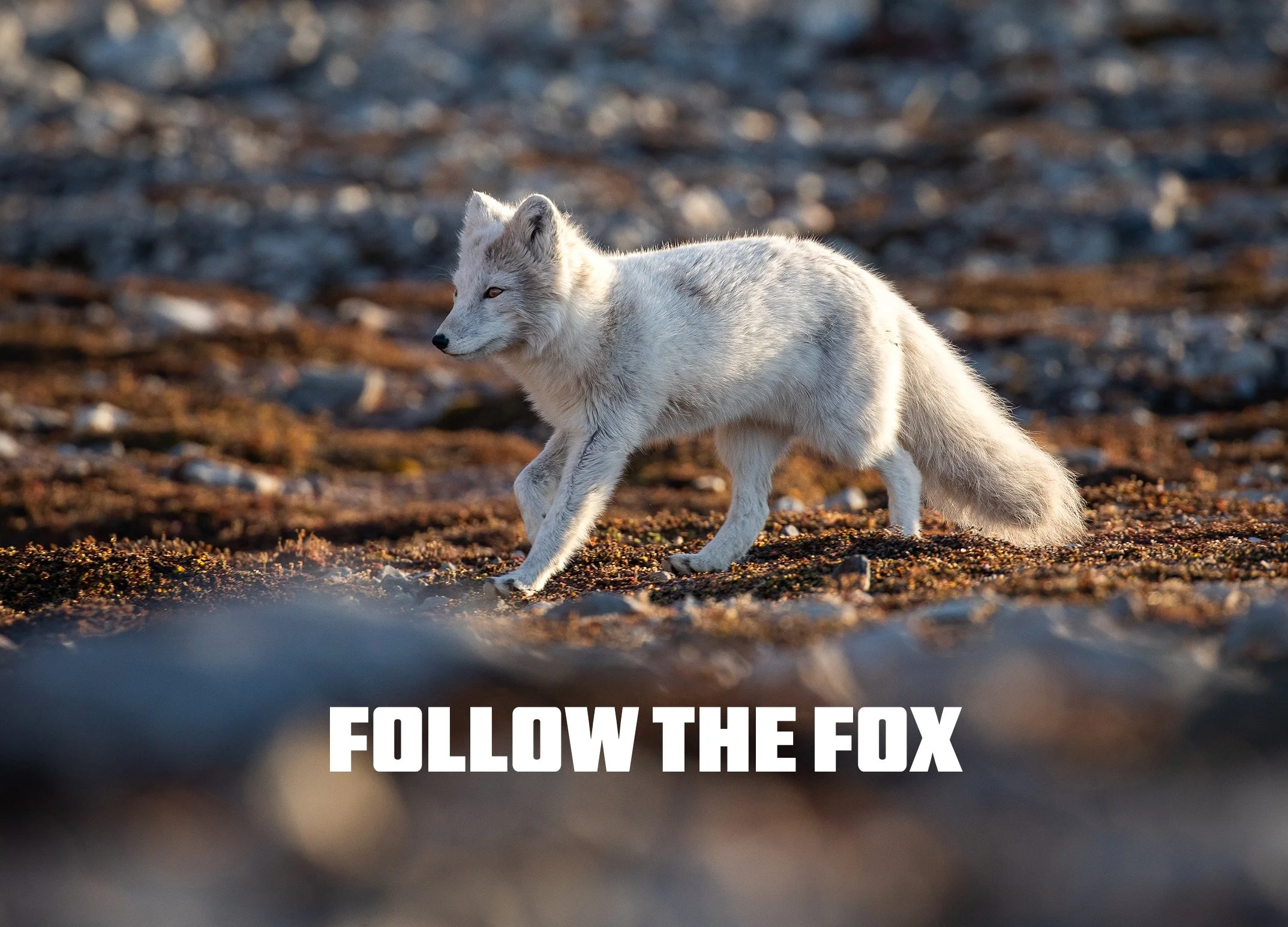
The Arctic Fox is the only canid living in Svalbard. Highly dependent on carrion during the winter and birdlife during the summer, this reflects on its intelligence, cunning, and resilience
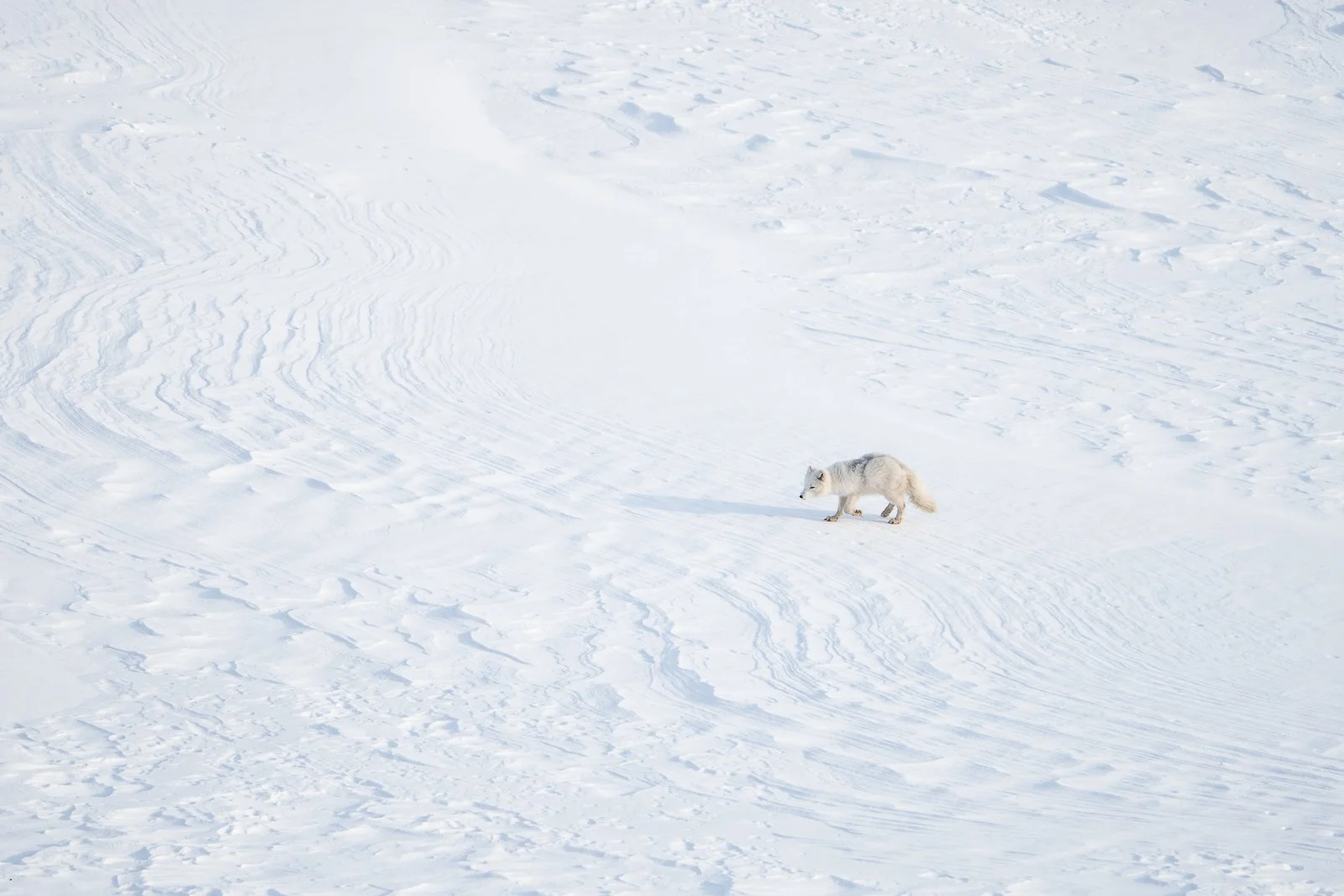
Winter across Spitsbergen is a canvas in white light and blue shadows, and somewhere in that landscape, low to the ground, a fox is moving. Its coat has turned from summer's brown-grey to a coat of pure white, thick enough to keep it warm even at -40°C without raising its metabolism. It is the best natural insulation of any Arctic mammal
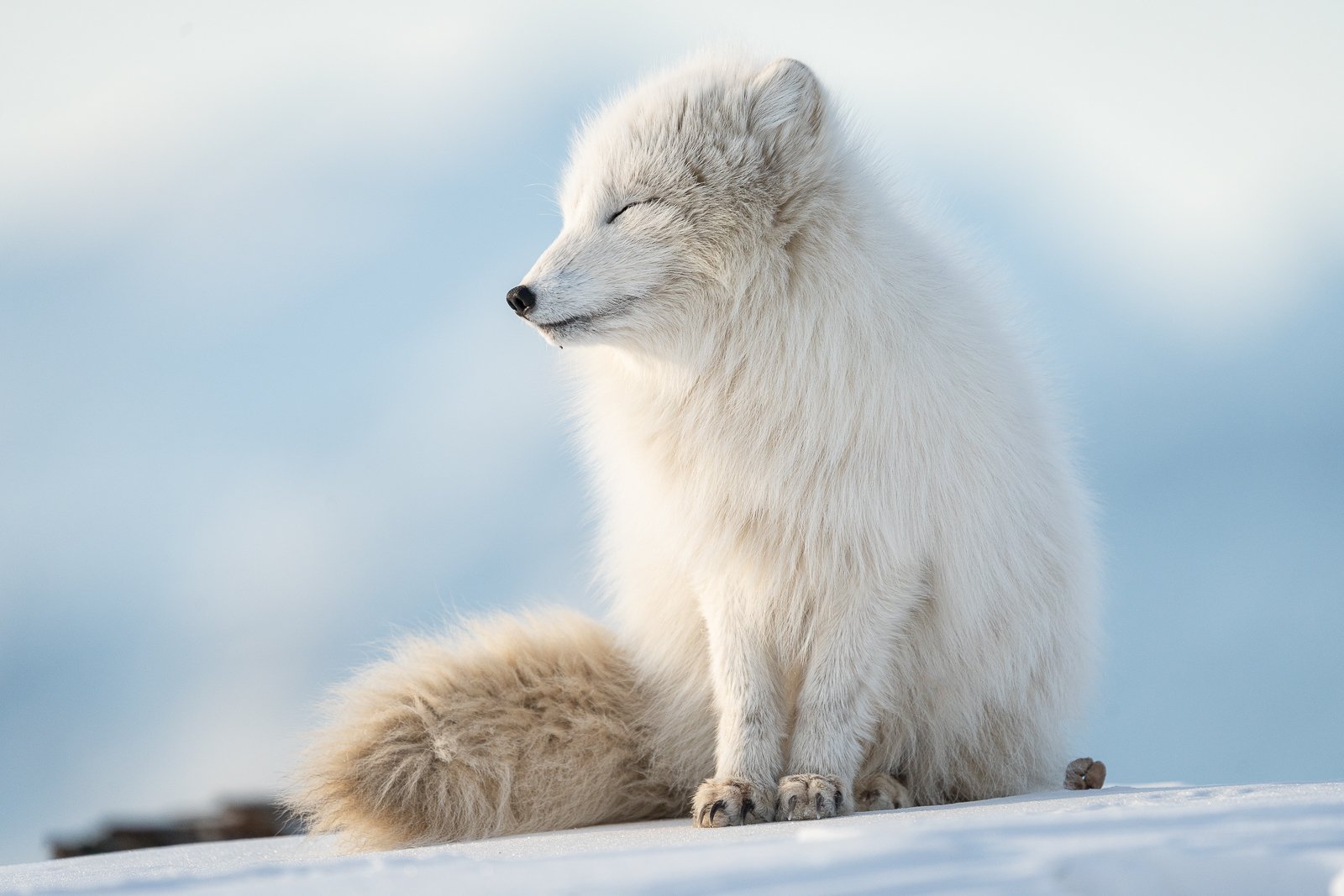
The Arctic fox does not migrate south when the polar night arrives. It has no bear's fat reserves to rely on. Instead, it survives on patience and opportunism. Through the darkest months, it patrols the valleys from the sedimentary plains to the fjord edges, even venturing on the sea-ice behind polar bears, scavenging the remains of seal kills the bears leave behind, a relationship the fox depends on more than most people realize. The harsh reindeer mortality is also one of the main suorces of food for foxes in the winter.
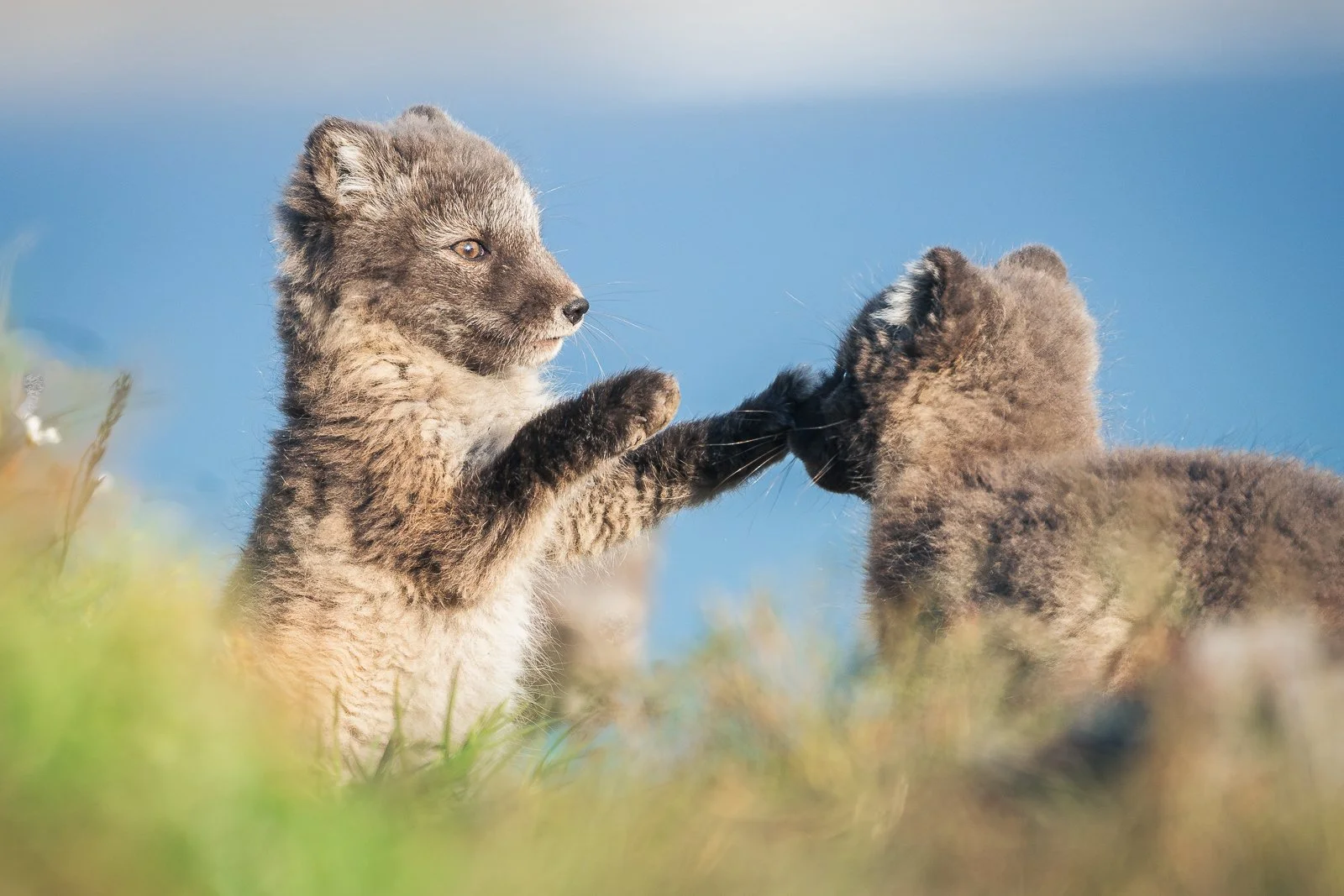
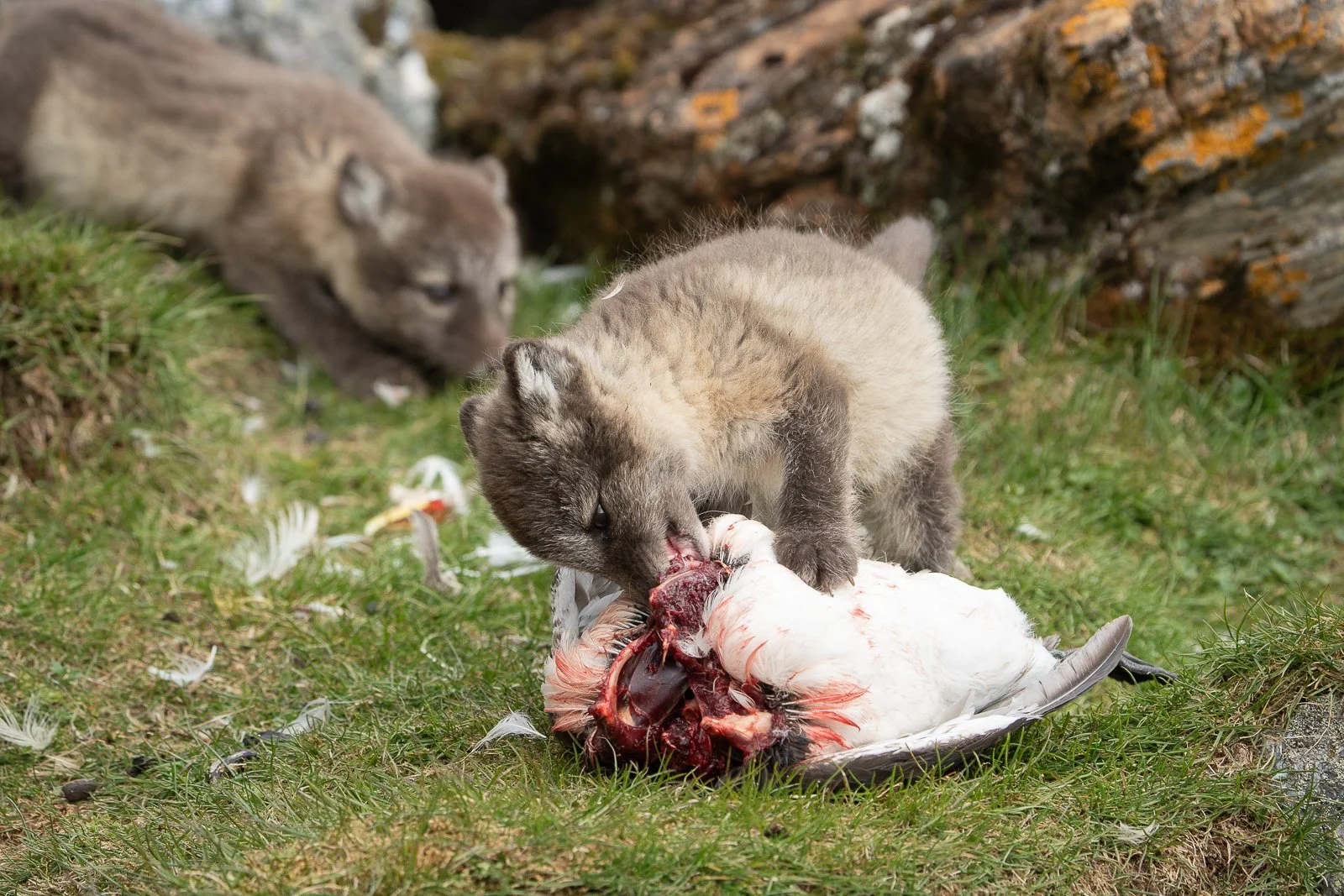
When summer returns and the tundra bursts briefly into colour, the fox shifts its diet again. Now it's the turn of the bird cliffs: eggs and chicks from thousands of nesting kittiwakes, guillemots and geese become an easy, abundant food source. Most foxes will cache surplus food, burying eggs to retrieve later once the cliffs fall quiet again.
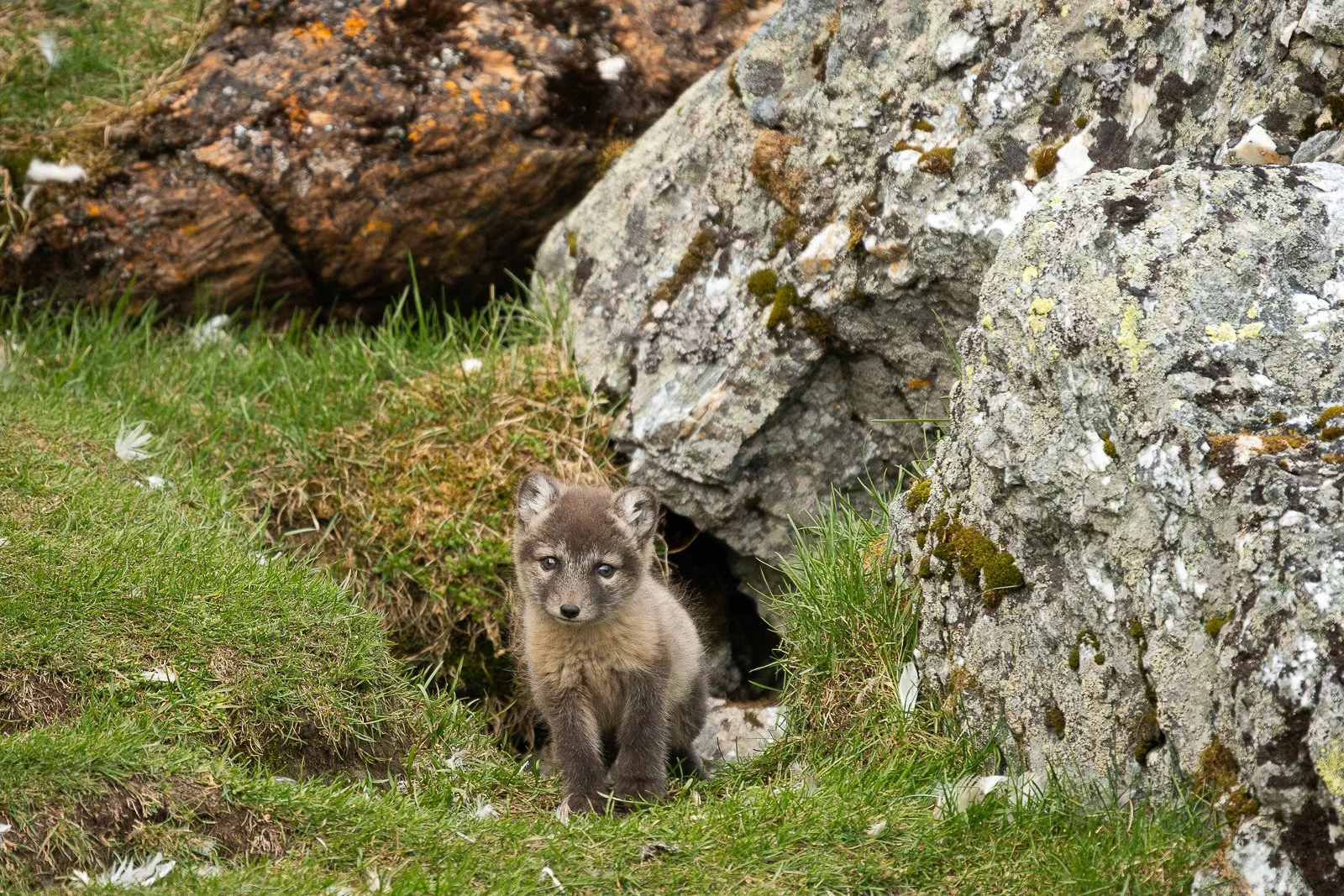
Dens are placed among scree boulders, often used generation after generation for decades, sometimes centuries. A good den, well-drained and insulated by permafrost, is a resource too valuable to abandon. Litters can number up to a dozen kits in a good lemming year, though Svalbard has no lemmings, so litter sizes here are tuned instead to the availability of bird colonies and carrion.
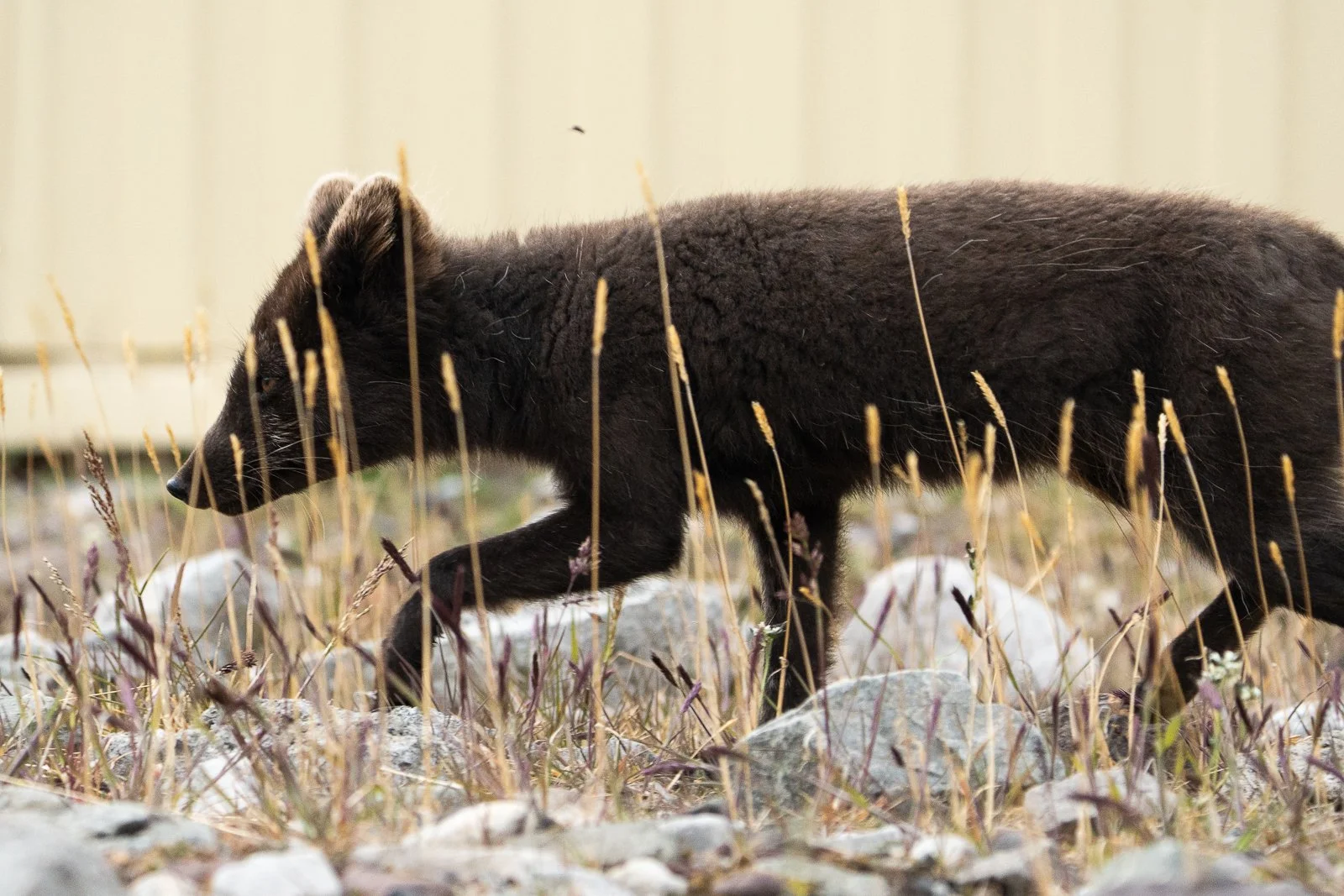
Two colour morphs exist here: the white fox we picture in postcards, and the rarer "blue" fox, holding a smoky grey-brown coat through the winter instead of turning white. Both are the same species, just different morphological variations.
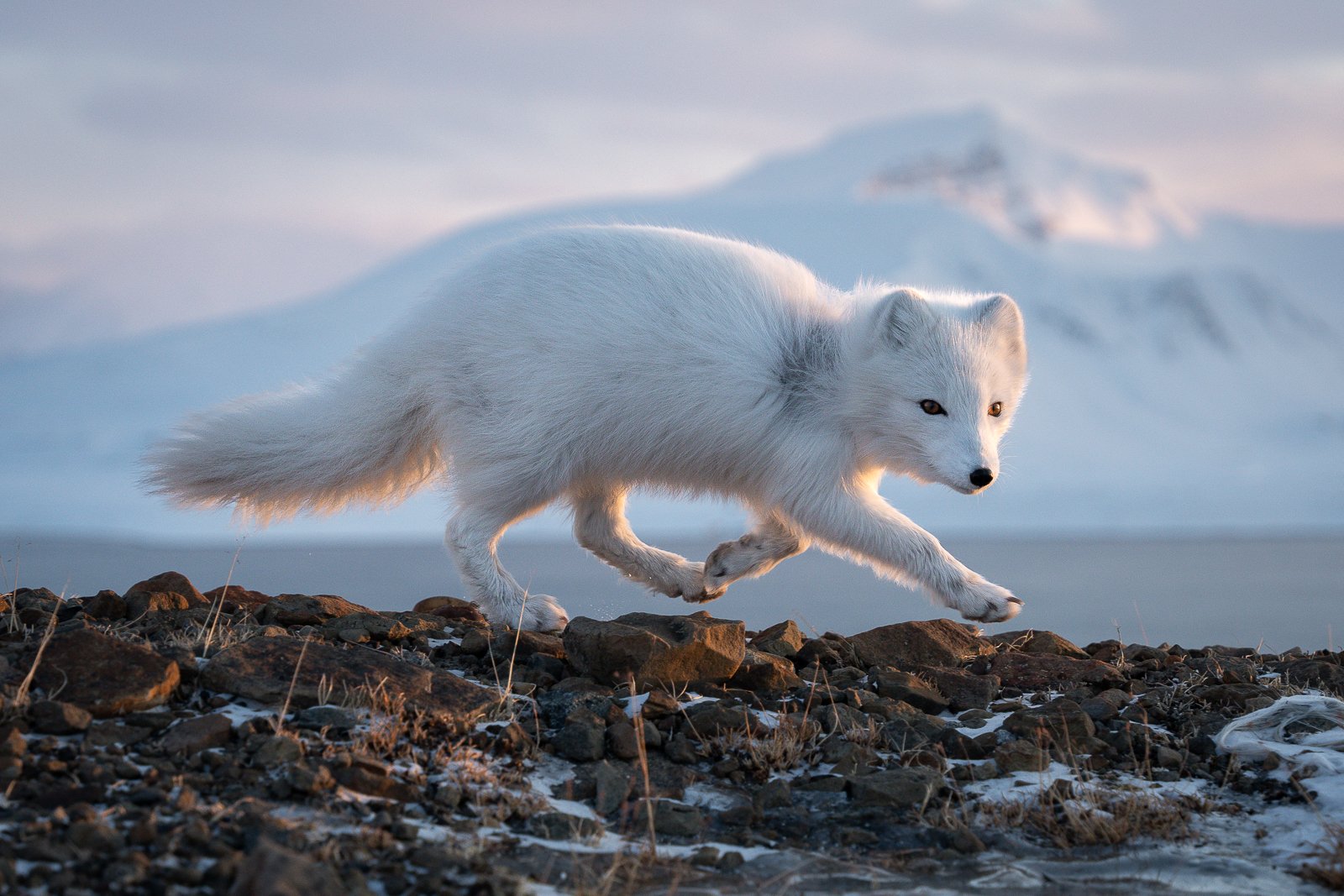
What makes the Arctic fox so compelling to watch is its relentless trot. Where a reindeer might slowly walk while grazing, the fox has often a determintation when moving, passing almost within reach, tail low, nose working the wind, almost like a vission. More striking is to know the distances they may reach by doing so. Norwegian researchers documented the long run of a female over the sea-ice, traveling 3500 km over 75 days that brought her from Svalbard to Ellesmere island, on the Canadian Arctic. This study recorded one of the longest dispersal events for this species, and the fastest rate of movement when she was crossing the ice sheet north of Greenland, when she completed 155 km in one day! Uff we will never see an Arctic Fox with the same eyes…
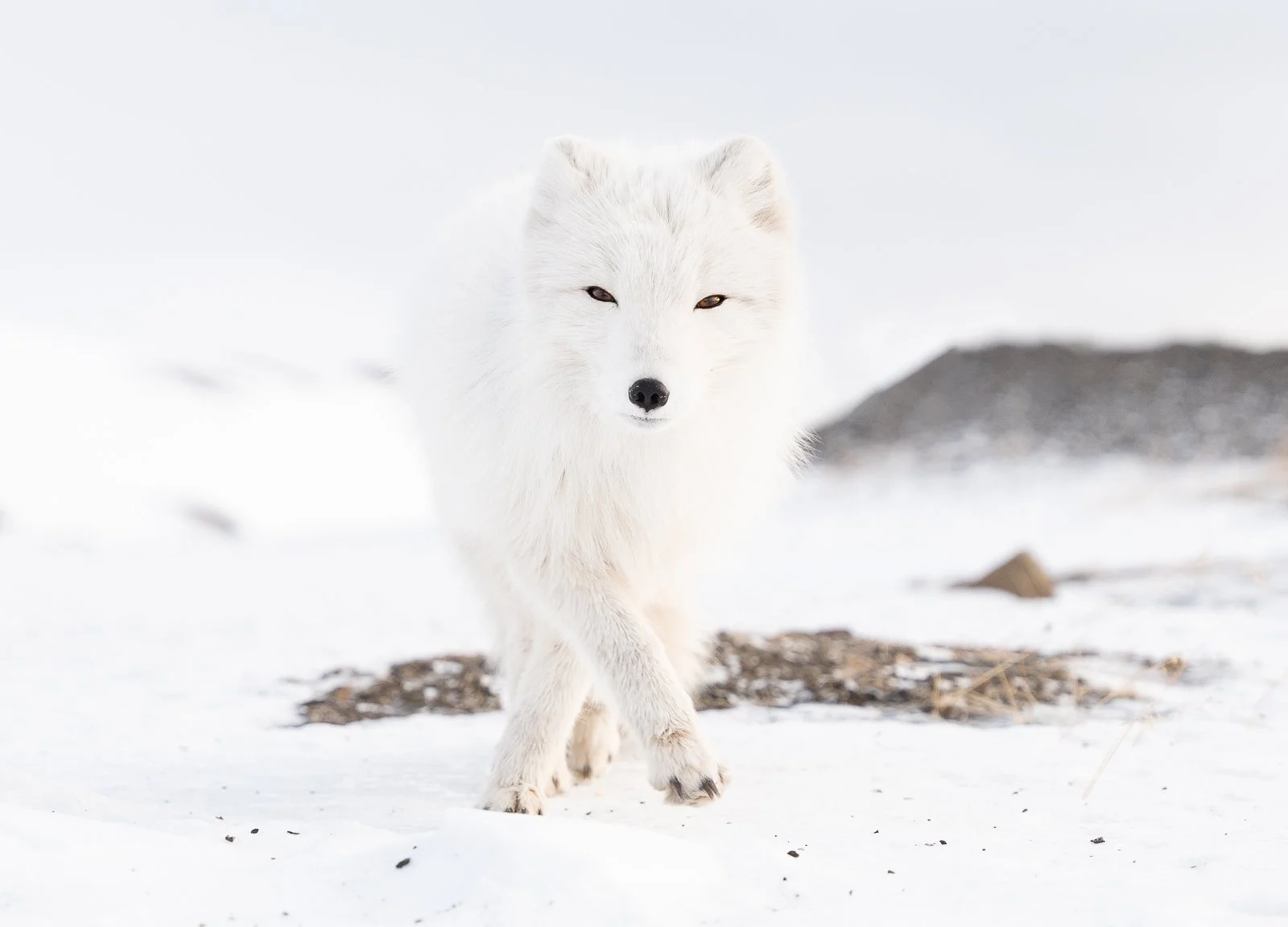
Small, quick, endlessly resourceful the Arctic fox may be the least imposing predator in Svalbard, but it might just be the toughest!
Do you like the story?